Click Me!
Orb
Click Me!
Orb
Click Me!
Orb

Decoding ISO 56000 Family

Innovation Management System Guidance

ISO 56001RequirementsISO 56000ISO 56002ISO 56003ISO 56005ISO 56006ISO 56007ISO 56008
Selected standard

ISO 56000

Fundamentals and vocabulary

Defines the basic concepts, principles, and vocabulary used across the ISO 56000 innovation management family.

Interaction
Click the electron or the floating label to inspect each ISO standard.

INTRODUCTION

The Core Definition of Innovation
The Shift to Systems Thinking

The Myth:

Innovation relies on serendipity, ad hoc activities, and isolated flashes of genius.

The Reality:

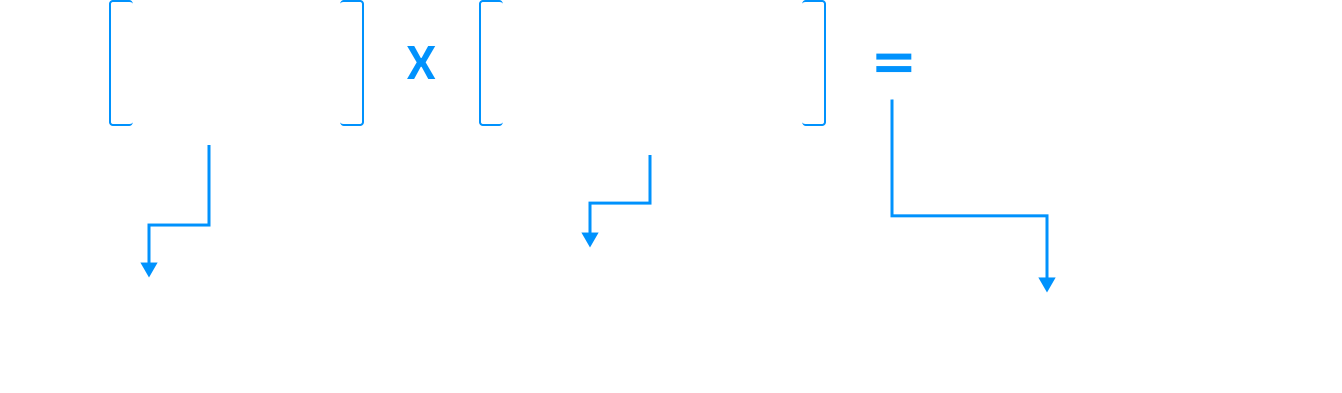
Systematic innovation manages the trade-off between optimizing current performance and exploring new opportunities.

Why a System? It aligns activities with strategic direction, removes barriers, fosters a supportive culture, and turns unpredictable exploration into a repeatable capability.

The Principles of Innovation Management

Realization of Value

1. Realization of value

Value—financial or non-financial—is realized through deployment, adoption, and measurable impact.

Realization of Value

1. Realization of value

Value—financial or non-financial—is realized through deployment, adoption, and measurable impact.

Future-Focused Leaders

2. Future-focused leaders

Leaders at all levels challenge the status quo with curiosity, courage, and a clear vision.

Future Leaders

2. Future leaders

Leaders at all levels challenge the status quo with curiosity, courage, and a clear vision.

Strategic Direction

3. Strategic direction

Innovation direction is driven by aligned objectives, ambition levels, and the right people.

Strategic Direction

3. Strategic direction

Innovation direction is driven by aligned objectives, ambition levels, and the right people.

Culture

4. Culture

Shared values and behaviors enable change, risk-taking, collaboration, and effective execution.

Culture

4. Culture

Shared values and behaviors enable change, risk-taking, collaboration, and effective execution.

Exploiting Insights

5. Exploiting insights

Diverse internal and external sources build insight to address stated and unstated needs.

Exploiting Insights

5. Exploiting insights

Diverse internal and external sources build insight to address stated and unstated needs.

Managing Uncertainty

6. Managing uncertainty

Uncertainty is managed through experimentation, learning, and iterative portfolio approaches.

Managing Uncertainty

6. Managing uncertainty

Uncertainty is managed through experimentation, learning, and iterative portfolio approaches.

Adaptability

7. Adaptability

Organizations adapt structures, processes, and capabilities to maximize innovation outcomes.

Adaptability

7. Adaptability

Organizations adapt structures, processes, and capabilities to maximize innovation outcomes.

Systems Approach

8. Systems approach

Innovation management applies a systems approach with interconnected elements and evaluation.

Systems Approach

8. Systems approach

Innovation management applies a systems approach with interconnected elements and evaluation.

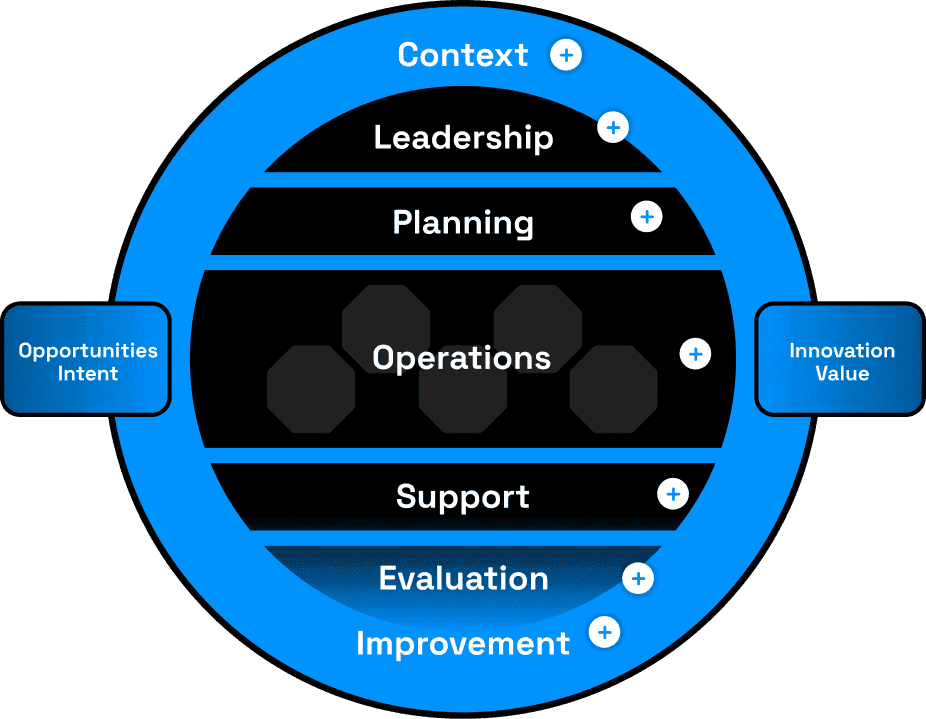
The IMS Architecture

Hotspot background
Hotspot background
Hotspot background

True innovation capability requires both the hardware (architecture) and software (principles) functioning as single unified system.

Clause 4

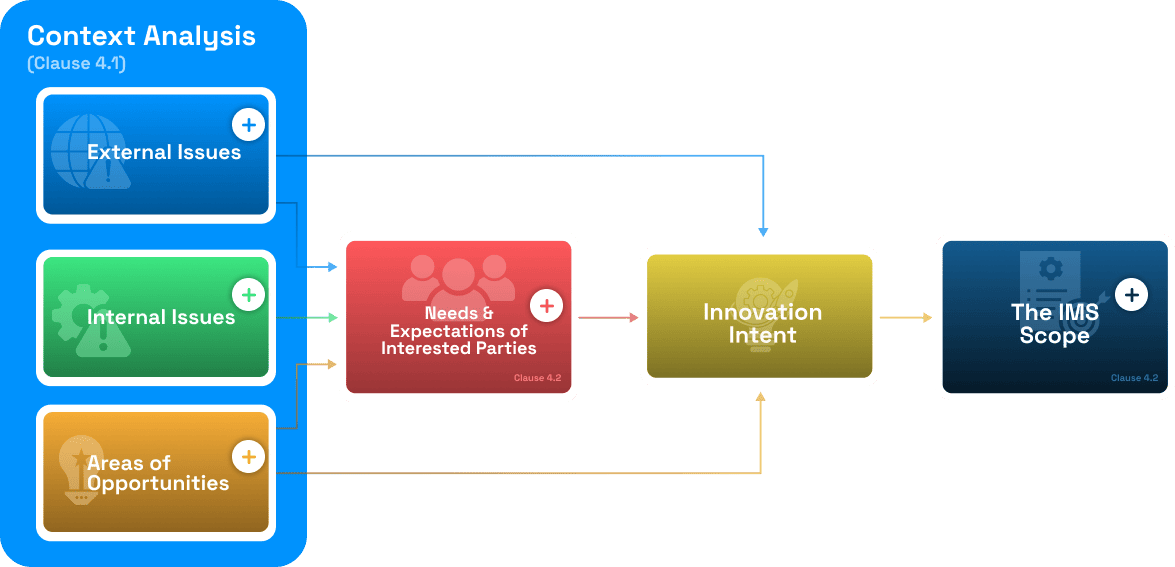
Understanding the Innovation Context

Before implementing an Innovation Management System, organizations must understand the environment in which innovation will operate.

ISO defines this through key steps.
Hotspot background
Hotspot background
Hotspot background

Clause 5

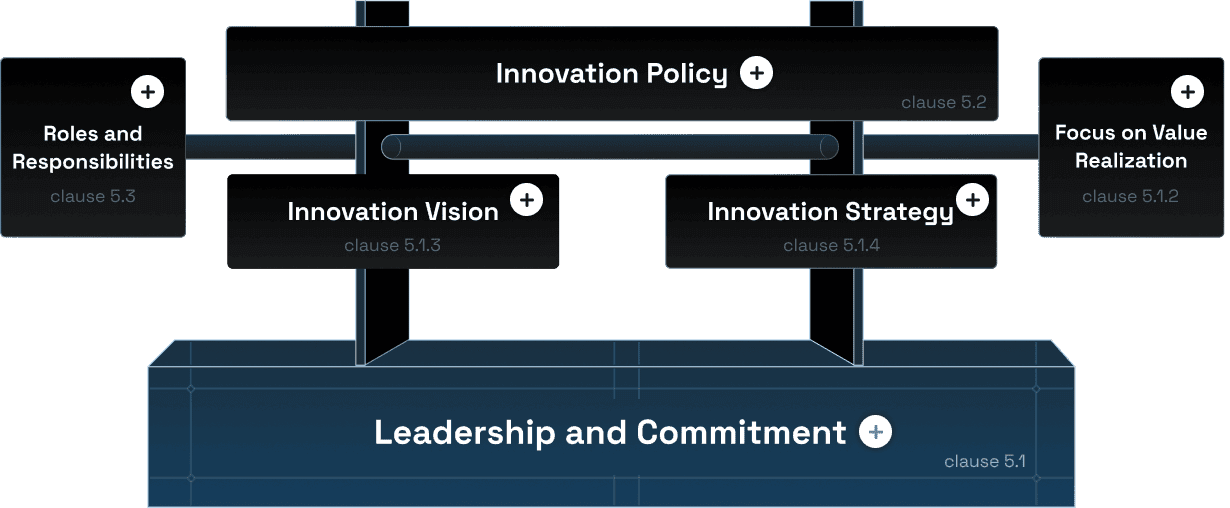
Leadership and The Drive For Value

Clause 5 positions innovation as a leadership responsibility: top management must set direction, define strategy and policy, shape culture, and assign clear roles to ensure consistent value realization. ISO 56000 emphasizes delivering value to users, customers, and other stakeholders.
Hotspot background
Hotspot background
Hotspot background

Clause 6

Planning the Innovation System

Planning begins with uncertainty. The organization identifies the opportunities and risks that could affect the innovation management system, then plans actions to enhance desired effects, reduce undesired ones, and improve the system over time.

Actions to address opportunities and risks
Planning to achieve Innovation Objectives
Organizational Structure
Innovation Portfolio

Identify Opportunities & Risks

Consider context issues and stakeholder needs and expectations. Determine opportunities and risks affecting the innovation management system. Define uncertainties and risk acceptance criteria.

Plan Actions

Integrate actions into innovation management processes and evaluate the effectiveness of those actions. Balance prevention verses risk acceptance to achieve continual improvement.

Actions to address opportunities and risks
Planning to achieve Innovation Objectives
Organizational Structure
Innovation Portfolio

Identify Opportunities & Risks

Consider context issues and stakeholder needs and expectations. Determine opportunities and risks affecting the innovation management system. Define uncertainties and risk acceptance criteria.

Plan Actions

Integrate actions into innovation management processes and evaluate the effectiveness of those actions. Balance prevention verses risk acceptance to achieve continual improvement.

Clause 7

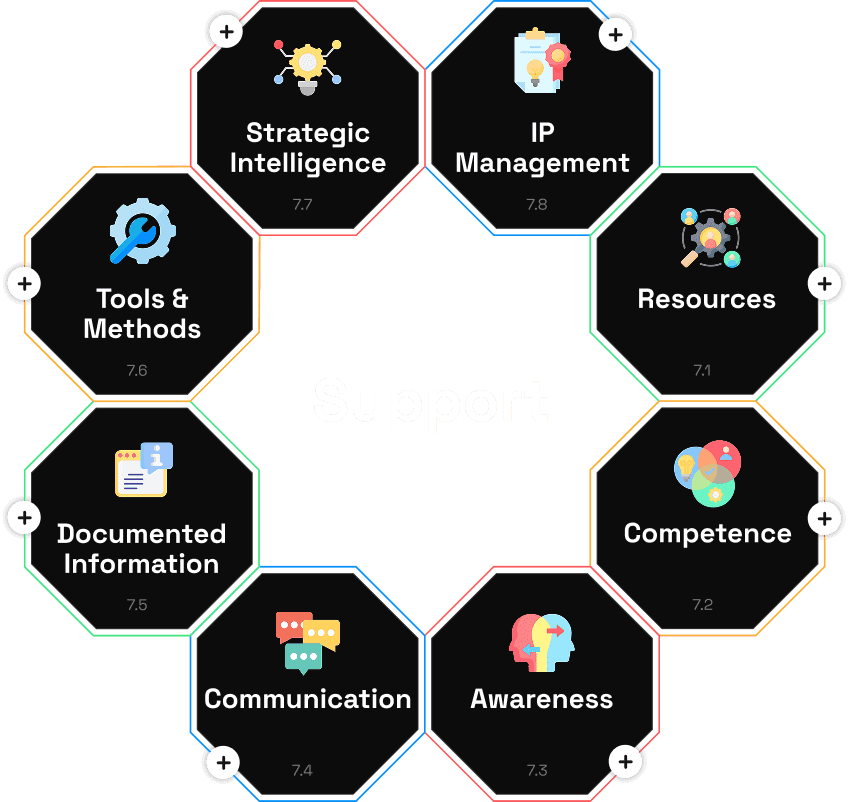
The Innovation Support System

Clause 7 provides the enabling conditions for innovation. It covers the resources, skills, awareness, communication, information, tools, intelligence, and intellectual property practices that help the innovation management system function effectively.
Hotspot background
Hotspot background
Hotspot background

Clause 8

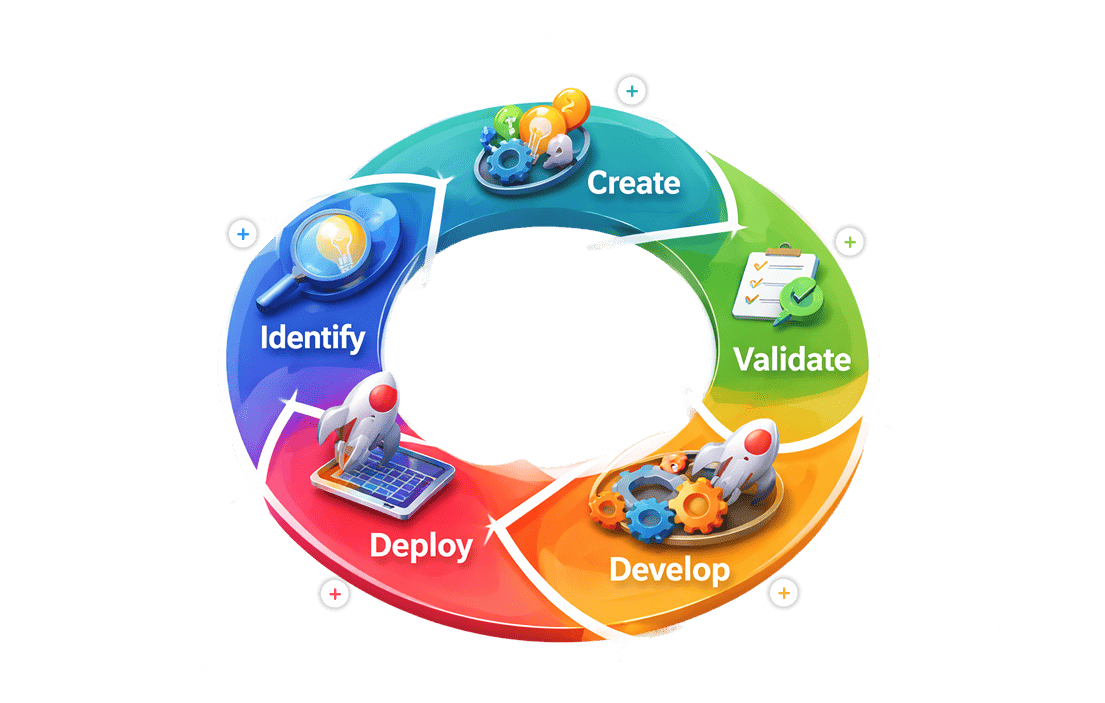
ISO Innovation Process

Innovation is not a straight line. Concepts may return to earlier stages as learning emerges.
Hotspot background
Hotspot background
Hotspot background

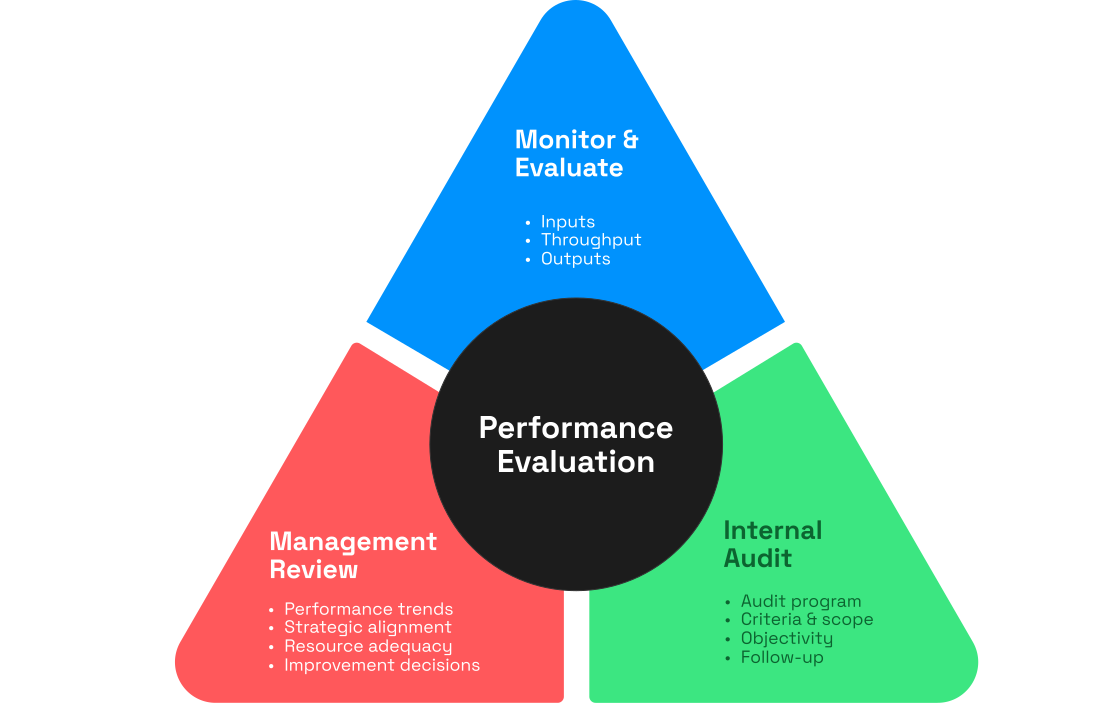
Clause 9

ISO Innovation Process

Innovation is not a straight line. Concepts may return to earlier stages as learning emerges.
Clause 10

Improvement

Clause 10 focuses on strengthening the innovation management system over time. It covers how the organization responds to deviations and nonconformities, takes corrective action, and continually improves the suitability, adequacy, effectiveness, and efficiency of the system.

Identify Improvement Opportunities

Identify improvement opportunities and implement the actions and changes needed to strengthen the system.

Nonconformity & Corrective Action

When something goes wrong, respond to it, investigate the cause, take corrective action, and prevent it from happening again.

Continual Improvement

Continually improve the innovation management system so it remains suitable, adequate, effective, and efficient.

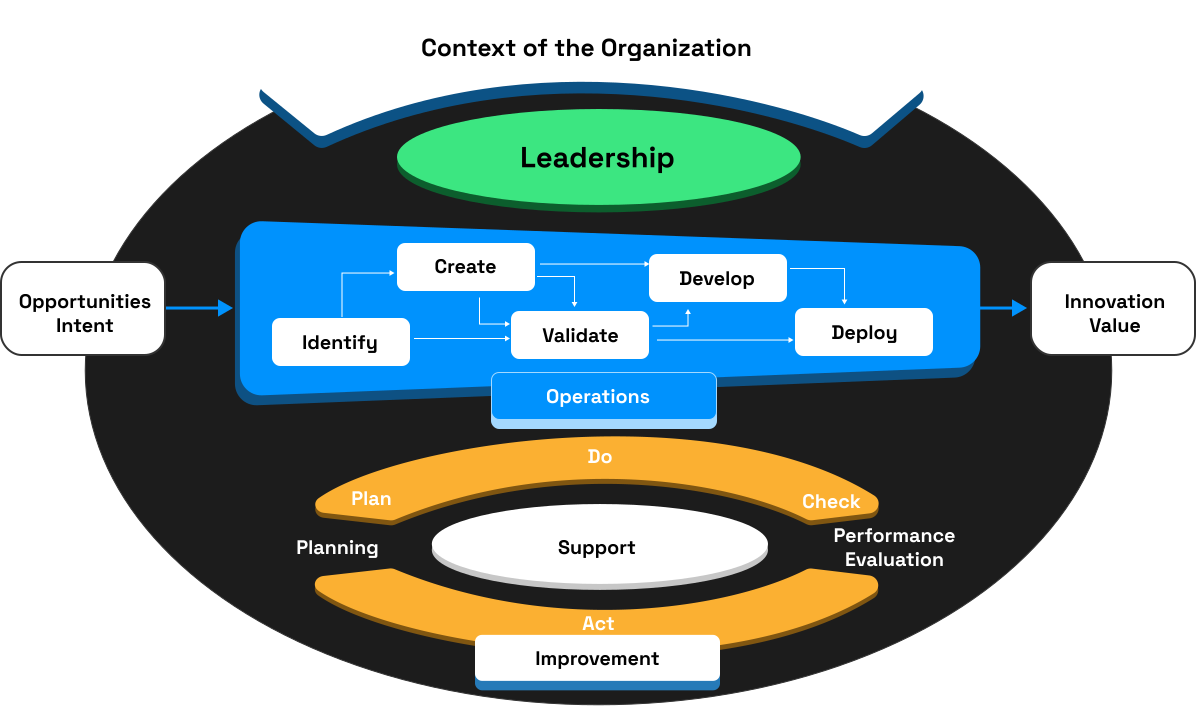
Plan-Do-Check-Act Cycle

The Plan-Do-Check-Act (PDCA) cycle enables continual improvement of the innovation management system.

PLAN (Clause 6)

Set objectives and determine actions to address opportunities and risks.

Set objectives & determine actions to address opportunities and risks.

DO (Clause 7 & 8)

Provide support and run innovation activities, initiatives, and processes.

CHECK (Clause 9)

Monitor performance, audit the system, and review results.

ACT (Clause 10)

Take action to correct issues and continually improve the system.

The Final IMS Architecture

Let’s combine the IMS Architecture with PDCA cycle
From Guidance to Requirements

ISO 56002 explains how the system works. ISO 56001 defines what the system requires. Enter into the platform where you can explore the standards in more structured way. This is how real companies do it.

Powered by Faisal - Thinking in Systems

Powered by Faisal - Thinking in Systems

Powered by Faisal - Thinking in Systems

Powered by Faisal - Thinking in Systems